Why a space agriculture company is spending this year growing lettuce in a tent
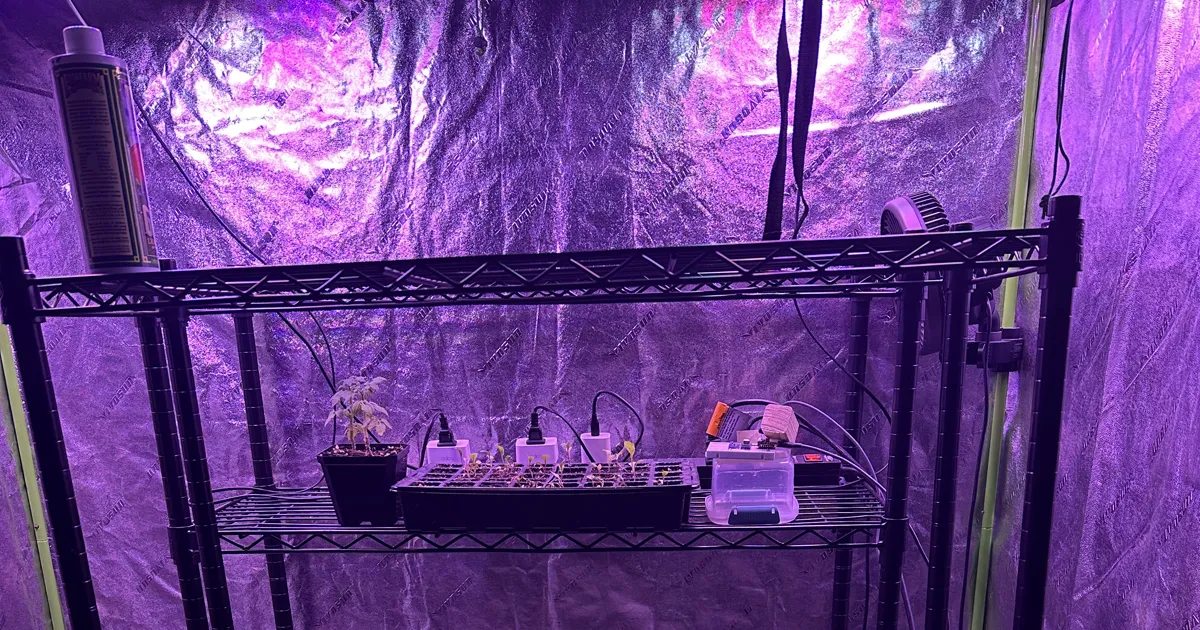
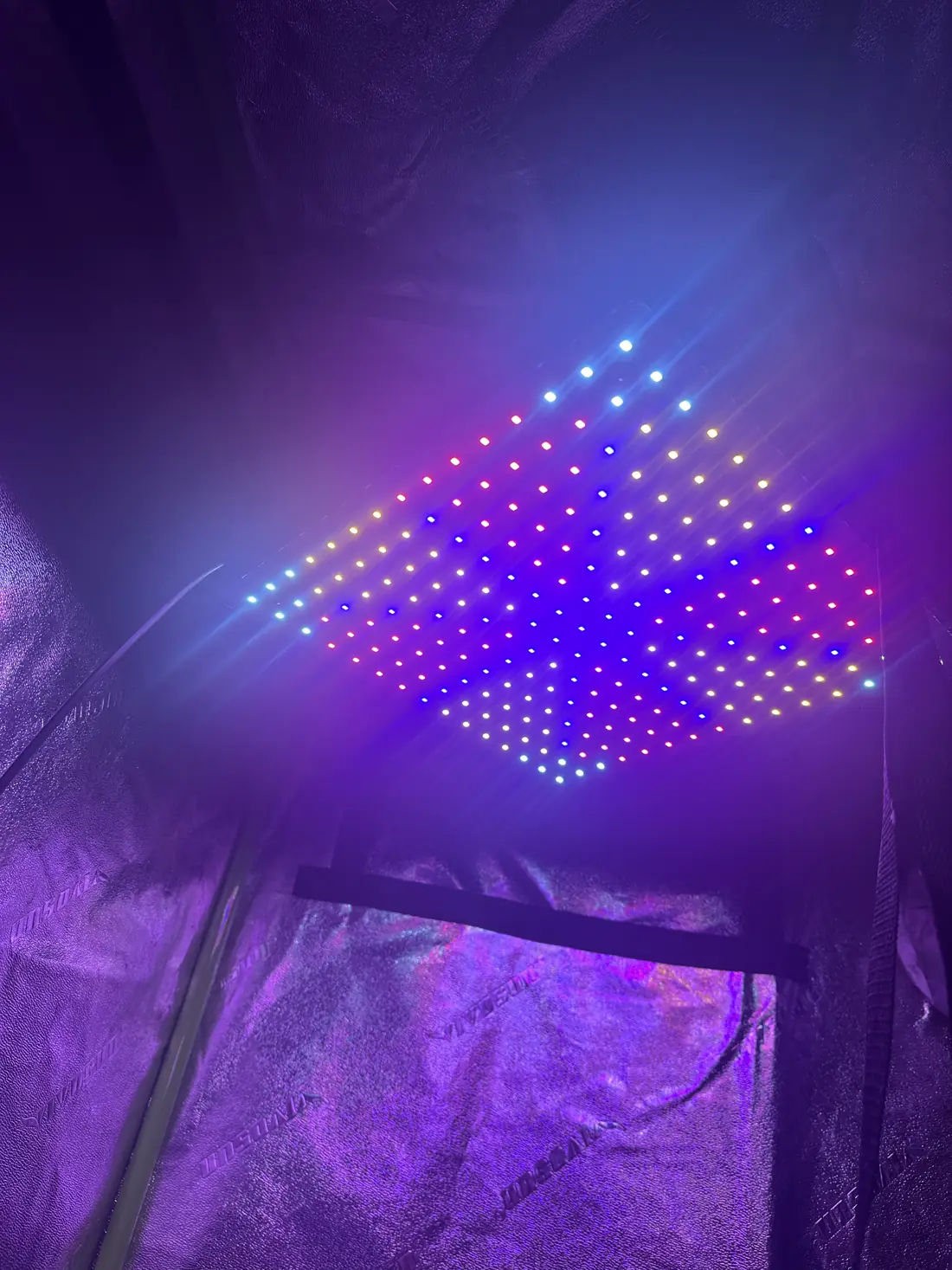
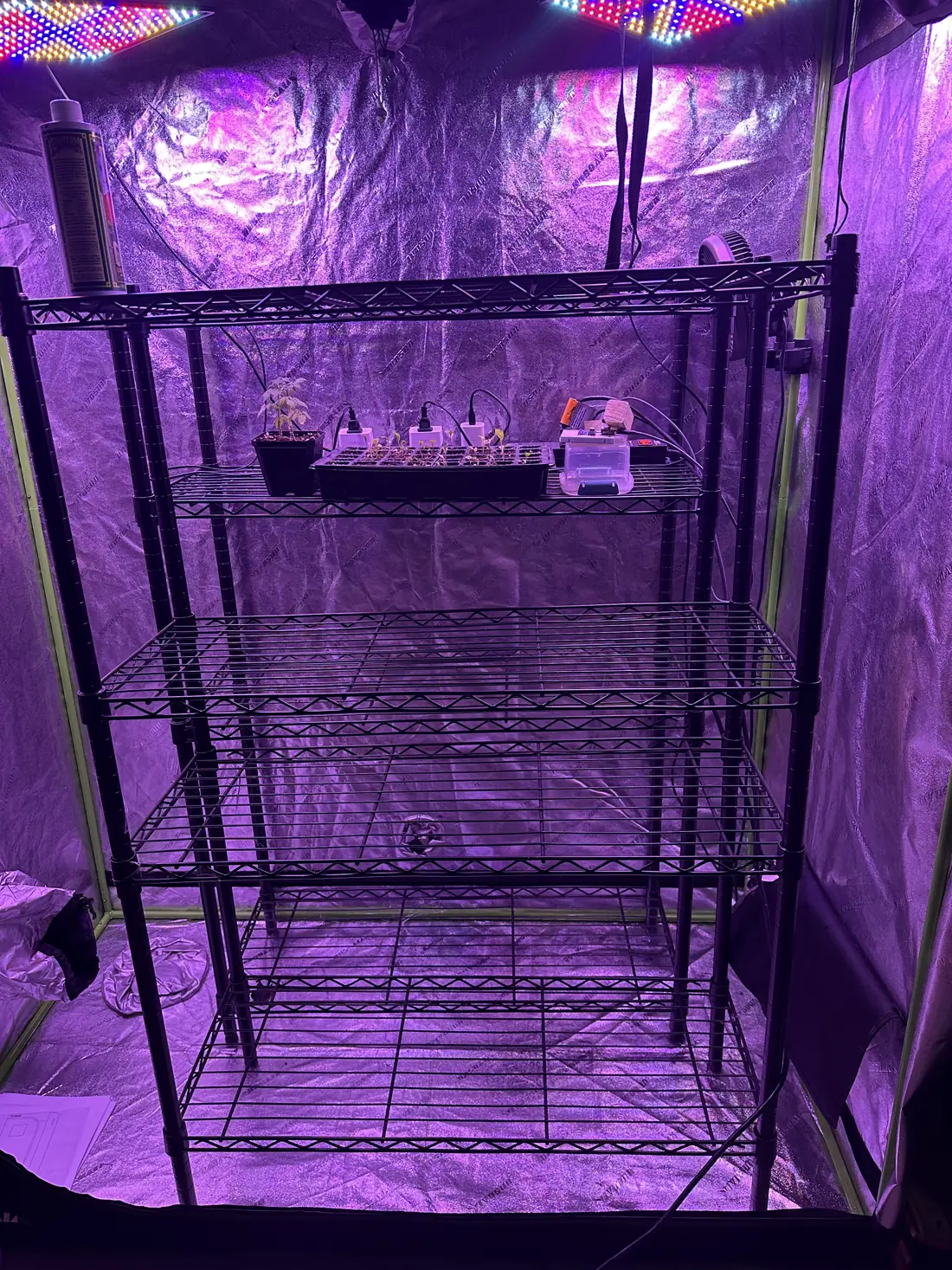
There is a grow tent in Houston with a rack, a light panel, and a tray of seedlings under instrumentation. The lettuce that matters is not in it yet, and that is deliberate. It is the least futuristic thing this company owns.
We call it the Earth Analogue Experiment. Its purpose is narrow: prove that the pillow, medium and light an Artera Plant Pod would carry grow food on Earth, under conditions we declared in advance, before we ask anyone to believe they grow food anywhere else.
The point is to be unoriginal
The tempting version of a space agriculture company starts at the spacecraft. It is also how you spend four years engineering a vehicle for a payload nobody has shown will grow.
So the Earth Analogue Experiment starts by reproducing results that already exist. We will grow Lactuca sativa cv. Outredgeous — the red romaine NASA grew aboard the ISS in Veggie, and the cultivar the ISS lettuce paper fixes, so the seed choice is not ours to make. When the crop comes out, we compare its edible radiation use efficiency against Wheeler’s 2008 NASA Biomass Production Chamber lettuce results: 0.42 grams of edible dry mass per mole of light delivered, at 16.8 moles per square metre per day.
That number is the target. Not a number we invented, not a number from a model — a number someone else published, that we should be able to approach in a system built from parts anyone can buy. Landing near it means this configuration grows food about as efficiently as a good chamber. Landing far from it means we learn something specific about why, in a tent, on Earth, where the cost of being wrong is a tray of lettuce.
Instrumented, which is the actual milestone
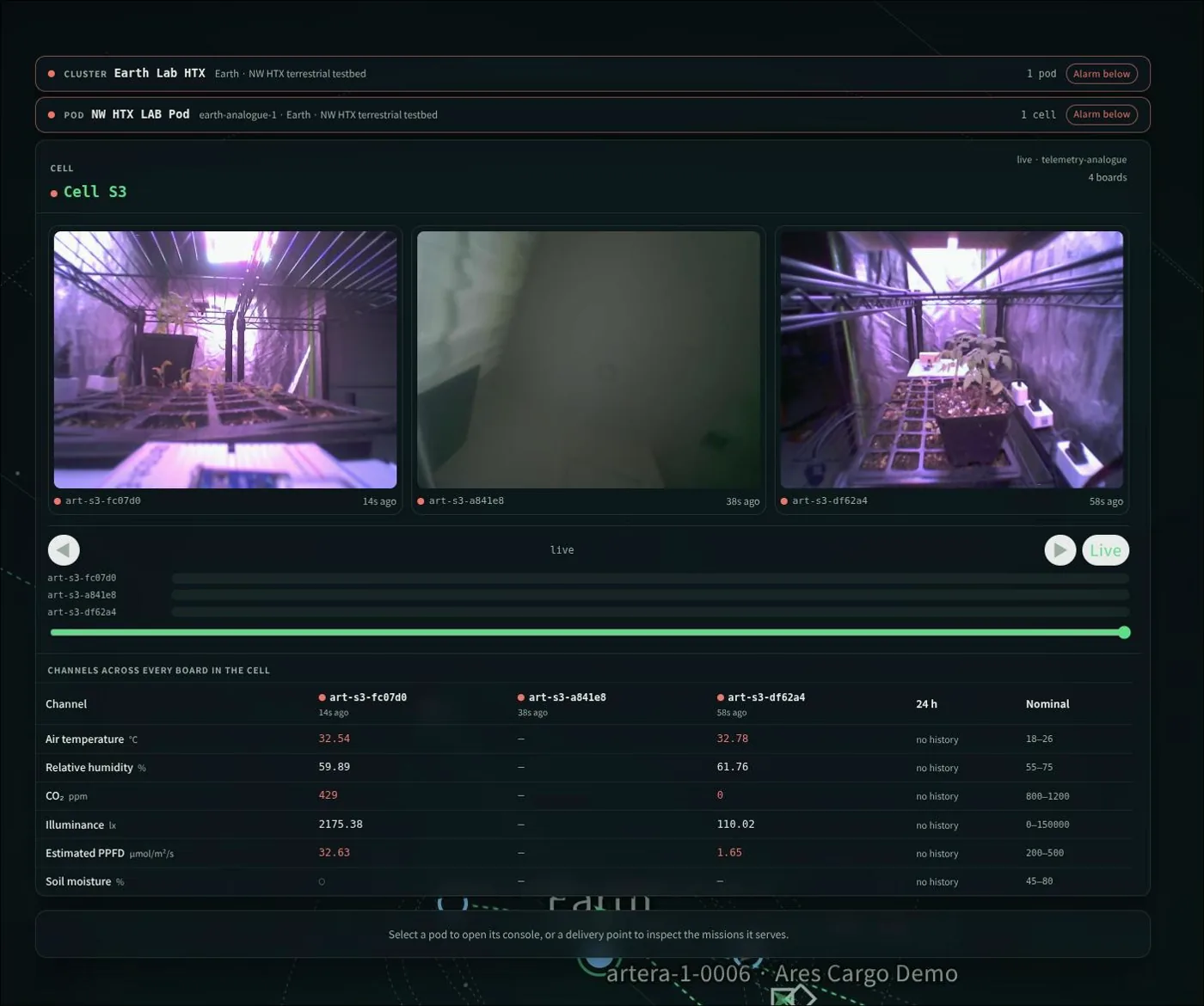
Growing lettuce is easy. Growing lettuce and proving exactly what it received is the work. This month the experiment crossed from wiring into measurement: environmental sensors and cameras reporting into the same control plane that will one day watch a pod that is not in Texas.
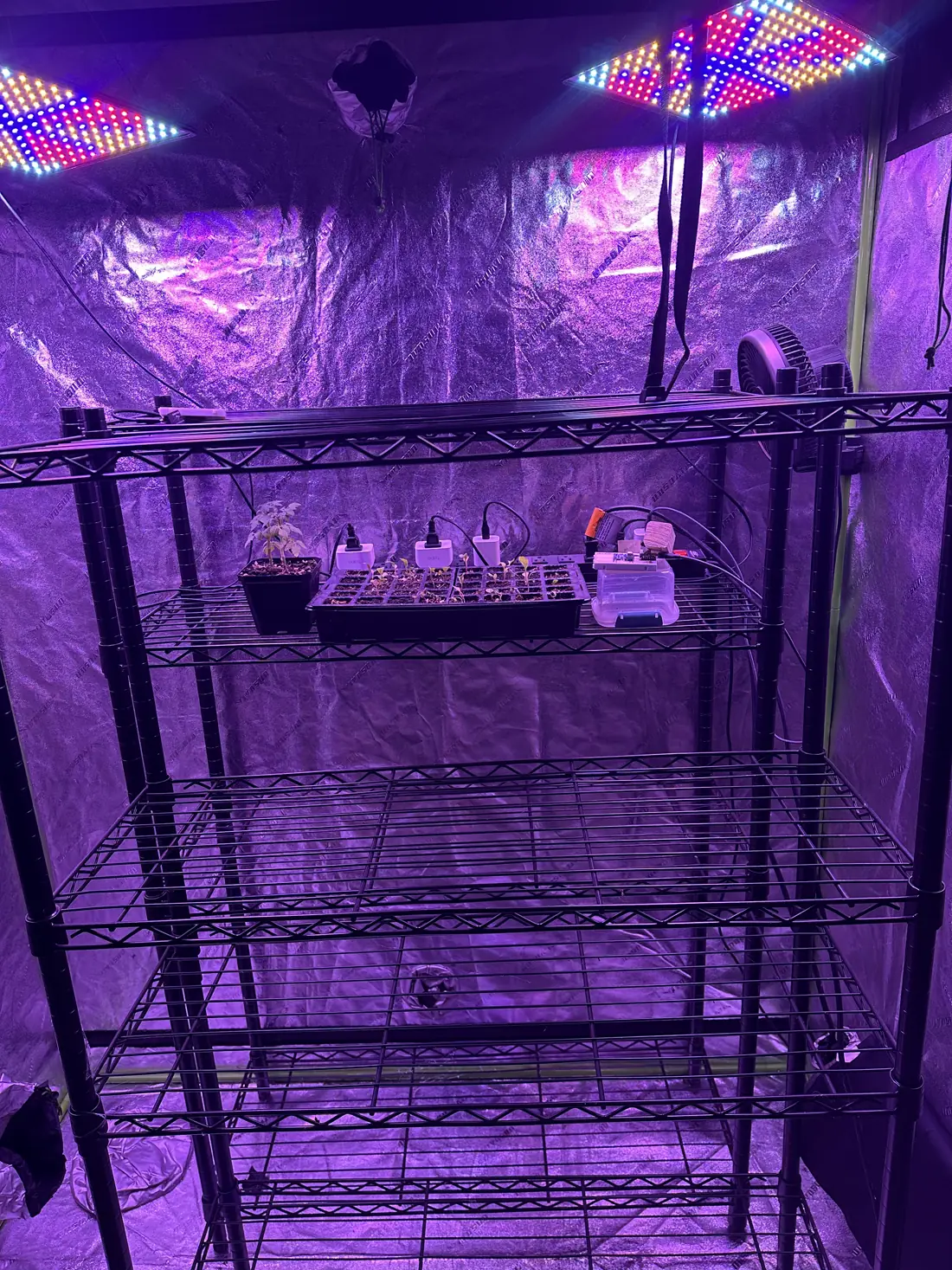
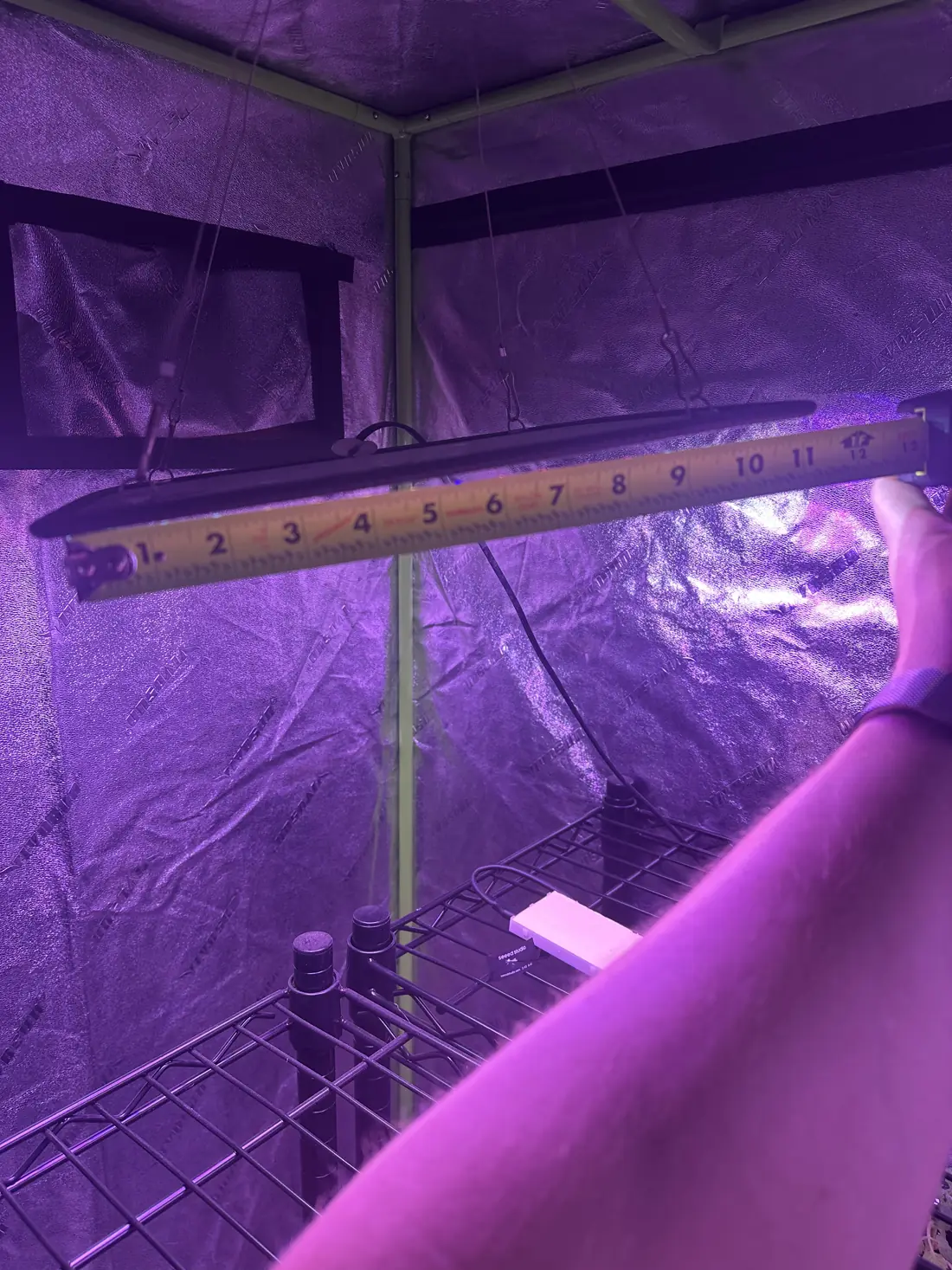
Every setting gets written down before the run starts and stays untouched through it — the light’s model, spectrum, dimmer position, mounting height and photoperiod, plus the medium, the fertilizer, and the watering and harvest rules. Mounting height gets measured with a tape, because it is the setting most likely to change quietly when somebody bumps a hanger, and a number you cannot reconstruct is a number you cannot publish.
The first thing the one instrumented board told us — through a light sensor nobody has calibrated yet, which is why calibration leads the list below — is that the light reaching the trays is well short of what the crop needs. Sowing into that would produce a result not worth reporting. It is the experiment doing its job before there is a crop to ruin.
What happens next
Calibrate the light measurement against a proper reference. Raise the delivered light to the declared band. Freeze every setting. Then sow, run it to harvest, weigh what comes out, and put our number next to Wheeler’s with every difference between the two systems written down beside it — a different cultivar, since Wheeler grew Waldmann’s Green, a different root zone, different CO₂, different lamps.
It is one crop in one tent. It will not prove that food grows in orbit.
It will mean that the next thing Artera says about growing food is a sentence with a measurement behind it, and that is the only kind worth putting on a spacecraft.